SuperBike Factory Collapse: What Creditors Should Do When a Customer Enters Administration
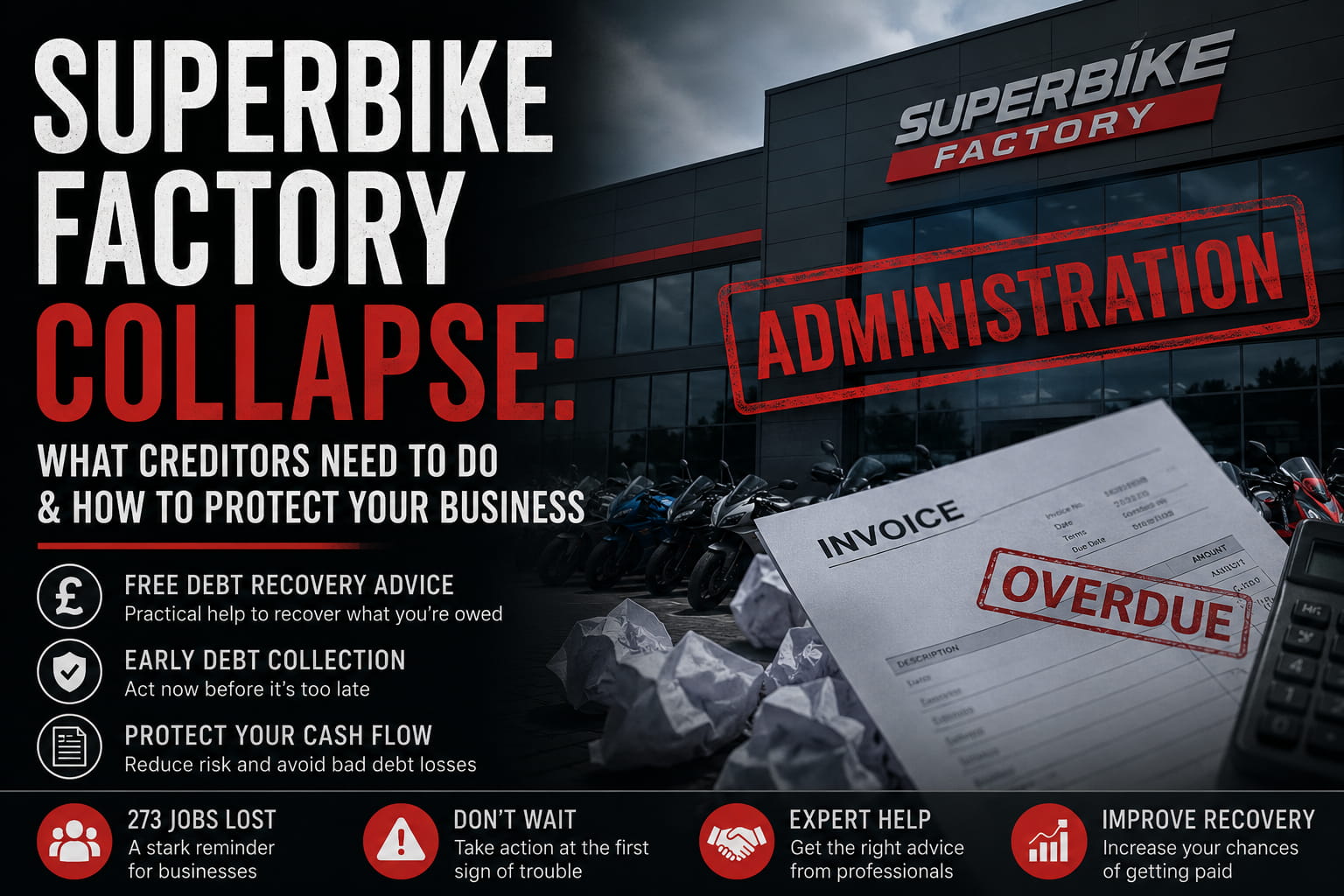
The recent collapse of SuperBike Factory has once again highlighted how quickly a successful business can run into financial difficulty. Once regarded as Europe's largest used motorcycle retailer, the company entered administration in July 2026, resulting in the loss of approximately 273 jobs and leaving suppliers, creditors and customers wondering what happens next.
For businesses that supplied goods or services on credit, the administration is a stark reminder of one simple fact: the longer an unpaid invoice remains outstanding, the less likely it is to be recovered.
At Debt Recovery Manual (DRM), we regularly provide free debt recovery advice to businesses looking to improve their chances of getting paid before matters reach insolvency.
What Happens When a Company Enters Administration?
Administration is a formal insolvency procedure designed to protect a company while licensed insolvency practitioners assess whether the business can be rescued, sold or wound down.
Once administrators are appointed, unsecured creditors are generally prevented from taking further legal action without the court's permission or the consent of the administrators.
In practical terms, this means that if your customer owes you money when they enter administration, recovering the debt becomes significantly more difficult.
Your claim will usually rank alongside other unsecured creditors, who often receive only a small dividend—or nothing at all—once secured creditors and insolvency costs have been paid.
The Biggest Mistake Creditors Make
One of the most common mistakes businesses make is waiting too long before taking action.
Many companies continue extending credit because they value the customer relationship or believe payment is just around the corner.
Unfortunately, warning signs often appear months before insolvency, including:
- Repeated promises to pay.
- Requests for extended payment terms.
- Ignored emails and telephone calls.
- Partial payments with no commitment to clear the balance.
- Disputes raised only after payment becomes overdue.
If these signs sound familiar, it may be time to seek debt recovery advice before the situation deteriorates further.
Why Early Debt Collection Matters
Professional debt collection is not simply about demanding payment.
An experienced debt recovery specialist will often identify financial distress long before a formal insolvency event occurs.
Early intervention can:
- Recover debts before insolvency proceedings begin.
- Open constructive dialogue with debtors.
- Negotiate realistic repayment arrangements.
- Preserve valuable commercial relationships.
- Reduce the likelihood of expensive litigation.
Many debts that appear difficult to recover can be resolved quickly when action is taken at the right time.
Free Debt Recovery Advice Could Save Your Business Thousands
Every unpaid invoice affects cash flow.
For many SMEs, one significant bad debt can have a knock-on effect throughout the business, making it harder to pay suppliers, wages and tax liabilities.
Seeking free debt recovery advice at the first sign of trouble can make the difference between recovering your money and becoming another unsecured creditor in an insolvency.
Professional advice doesn't necessarily mean immediate legal action. Often, understanding your options is enough to make an informed commercial decision.
What Should You Do If Your Customer Enters Administration?
If you discover that a customer has entered administration:
- Stop supplying further goods or services unless agreed with the administrators.
- Gather all invoices, contracts and supporting documents.
- Submit your proof of debt promptly.
- Monitor communications from the administrators.
- Seek independent debt recovery advice regarding any personal guarantees, retention of title clauses or other recovery options.
The earlier these steps are taken, the better your position is likely to be.
Prevention Is Better Than Recovery
While no one can predict every business failure, there are practical steps businesses can take to reduce bad debt exposure:
- Carry out credit checks before extending significant credit.
- Monitor payment behaviour rather than relying solely on credit reports.
- Chase overdue invoices promptly.
- Keep accurate contracts and signed documentation.
- Don't ignore repeated broken promises.
Strong credit control remains one of the most effective forms of risk management.
Final Thoughts
The administration of SuperBike Factory serves as another reminder that even well-known, fast-growing businesses can experience sudden financial difficulties. Businesses supplying goods or services on credit should never assume that size or reputation guarantees payment.
If you're dealing with overdue invoices, don't wait until your customer appears in the insolvency news.
Getting the right debt recovery advice early could dramatically improve your chances of being paid.
At Debt Recovery Manual, we provide practical guidance, industry insights and free debt recovery advice to help businesses recover unpaid invoices efficiently and protect cash flow before problems become irreversible.
Whether you are considering professional debt collection, legal action or simply want to understand your options, taking action early almost always delivers better outcomes than waiting.